Central Bank of Nigeria reiterates commitment to reform drive and economic stability at IMF Spring Meetings
Date: 2026-04-20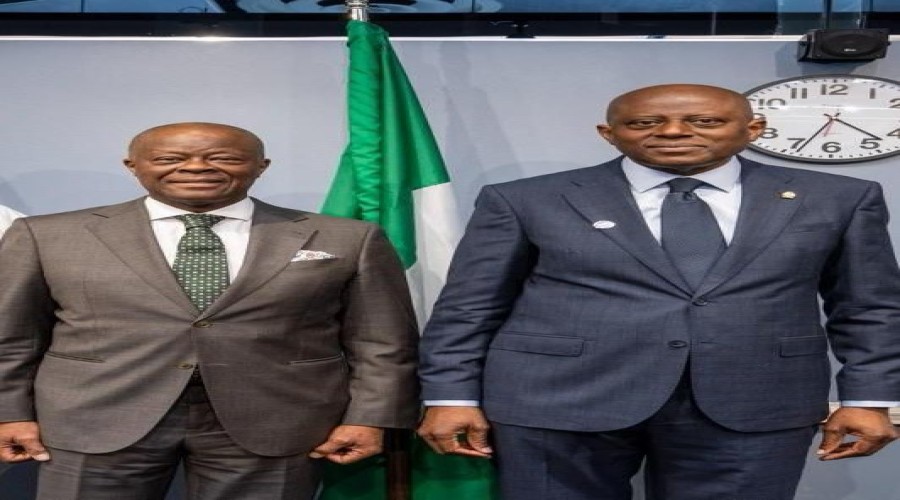
By: Kanto Kai Okanta
The
Central Bank of Nigeria has reiterated its commitment to sustaining ongoing
economic reforms and strengthening macroeconomic stability following the
conclusion of the 2026 Spring Meetings of the International Monetary Fund and
World Bank in Washington, D.C.
Governor
Olayemi Cardoso addressed Nigerian journalists at the end of the meetings,
stating that the Central Bank of Nigeria (CBN) remains focused on consolidating
recent gains, reinforcing institutional capacity, and ensuring long-term
economic stability.

He
noted that Nigeria demonstrated strong leadership during the meetings,
reaffirming its commitment to reforms aimed at promoting stability, growth, and
economic opportunity. According to him, despite global economic uncertainties,
Nigeria’s reform trajectory continues to stand out, with policy measures
contributing to naira stability, increased foreign reserves, and improved
investor confidence and capital inflows.
Governor
Cardoso highlighted that ongoing reforms are yielding measurable results,
including lower inflation, more stable foreign exchange markets, and stronger
monetary policy outcomes that are laying the foundation for sustained growth.
He
also underscored Nigeria’s role in advancing regional financial integration,
noting that the country is set to host the African Monetary Institute in Abuja,
which is expected to support deeper monetary cooperation across the continent.

On
financial sector reforms, the Governor referenced the recent banking
recapitalisation exercise, which raised 4.65 trillion naira, attracting strong
participation from both domestic and foreign investors. He said the outcome
reflects growing confidence in Nigeria’s financial system.
Cardoso
further stated that the Central Bank’s target of 1 billion US dollars in
monthly diaspora remittances by the end of 2026 remains on track, urging
commercial banks to leverage existing reforms to improve access and efficiency
for Nigerians in the diaspora.
He
added that Nigeria’s foreign exchange market is now more market-driven and
sufficiently liquid, allowing it to operate with greater autonomy and
stability.
The
Governor also highlighted the Central Bank’s partnership with IMF’s AFRITAC
West II, emphasizing ongoing efforts to strengthen human capital development
and institutional capacity as key pillars for sustainable economic management.