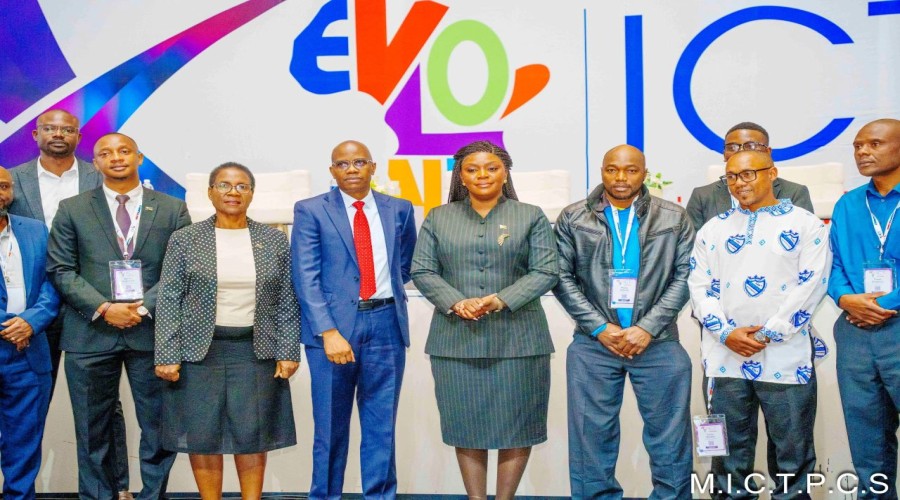
By: Nana
Appiah Acquaye
Zimbabwe has reaffirmed its
commitment to accelerating digital transformation and strengthening its
technology ecosystem as part of the Smart Zimbabwe 2030 strategy, with a
renewed focus on infrastructure development, innovation, and skills growth.
Speaking as Guest of Honour
at the 3rd Edition of the Evolve Summit hosted by CompuLink, Zimbabwe’s
Minister of ICT, Postal and Courier Services, Hon. Tatenda Mavetera, outlined
the government’s strategic priorities aimed at advancing the country’s digital
economy.
The summit, held under the
theme “Empowering Africa’s Digital Leap,” brought together policymakers,
industry leaders, and innovators to discuss pathways for Africa’s technological
advancement and economic transformation.
Hon. Mavetera emphasized
that digital infrastructure is central to national development, describing
fibre networks, data centres, and base stations as critical enablers of
economic independence and growth.
She noted that under Smart
Zimbabwe 2030, the government is prioritizing the treatment of digital
infrastructure as public goods while also encouraging increased private sector
participation to expand connectivity and access.
The Minister also
highlighted efforts to transform the country’s demographic profile into a
skills-driven economy, warning that without targeted investment in education
and innovation, Africa’s youth population could become a liability rather than
an asset.
She pointed to initiatives
such as innovation hubs in state universities and the Presidential Innovation
Fund, which aim to embed computational thinking and equip young people with
practical skills in fields such as agriculture, health, and energy.
According to the Minister,
government is also finalizing an ICT Start-Up Act designed to provide tax
incentives, simplify business registration, and support entrepreneurship in the
digital sector.
Plans are also underway to
establish a national digital identity system to enhance trust, improve service
delivery, and support financial inclusion across the country.
Among the key commitments
outlined at the summit were the promotion of smart agriculture through Internet
of Things (IoT) technologies, development of a national e-government platform,
establishment of a cybersecurity centre, local assembly of smart devices, and
positioning Zimbabwe as a regional digital transit hub.
The government reaffirmed
that Zimbabwe remains open to digital investment and partnerships, as it seeks
to accelerate innovation-led growth and strengthen its role in the regional
digital economy.