By: Kanto Kai Okanta
Safaricom Ethiopia
Telecommunications PLC, through its Foundation, has signed a Memorandum of
Understanding (MoU) for the Addis Tesfa Phase One Kiosk Project in partnership
with UN-Habitat, the Addis Ababa City Labor & Skills Bureau, and the
Working Premises Development & Administration Agency.
The agreement marks a
collaborative effort aimed at creating sustainable livelihood opportunities for
vulnerable community members, including returnees and unemployed individuals in
Addis Ababa.
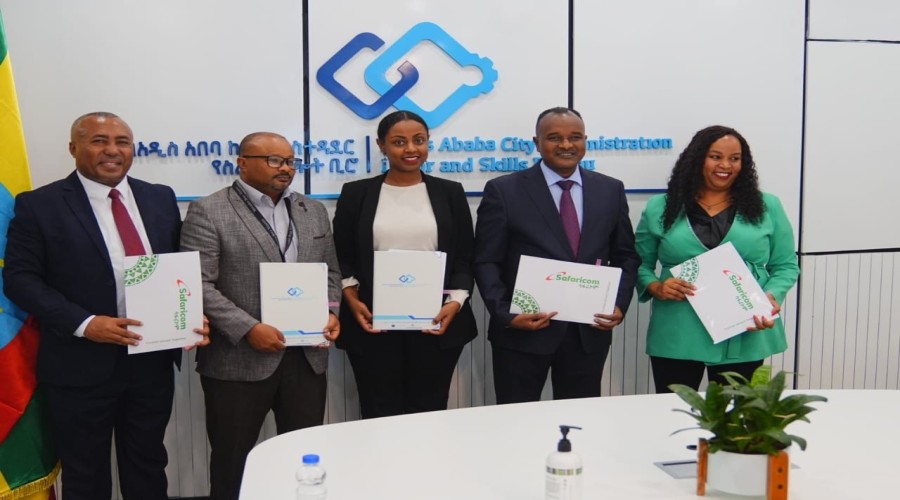
The MoU signing ceremony
brought together senior representatives from the partner institutions,
including Bethlehem Tameru, Head of Safaricom Ethiopia Foundation; Million
Mathewos, Deputy Mayor of Addis Ababa and Head of Labor & Skills; Aida
Awel, Director General of the Working Premises Development & Administration
Agency; and Omar Sylla, Director of UN-Habitat’s Regional Office for Africa.
The event was also attended by Safaricom Ethiopia’s External Affairs Chief
Officer, Dr. Andualem Admassie, alongside other stakeholders.
Under the initiative, the
partners will invest a total of USD 300,000, with USD 200,000 contributed by
Safaricom Ethiopia Telecommunications and USD 100,000 from UN-Habitat. The
funding will support the construction of 100 kiosks designed to provide affordable
business spaces for small-scale entrepreneurs.
According to Safaricom
Ethiopia Foundation, the project is expected to directly benefit more than 200
individuals by enabling access to sustainable income-generating activities. The
kiosks will serve as structured micro-business spaces aimed at promoting
economic inclusion and strengthening local livelihoods.
Stakeholders described the
initiative as a model of public-private-development partnership, emphasizing
the importance of collaboration between government institutions, international
organizations, and the private sector in addressing unemployment and driving
community development.
The Addis Tesfa Phase One
Kiosk Project forms part of broader efforts to support Ethiopia’s
socio-economic development agenda through targeted interventions that promote
entrepreneurship, skills development, and inclusive economic growth.