By:
Nana Appiah Acquaye
Zimbabwe
is set to make Artificial Intelligence (AI), Coding, the Internet of Things
(IoT) and Robotics compulsory components of its primary and secondary school
curriculum as part of efforts to build a technology-driven workforce and
accelerate the country's digital transformation agenda.
The
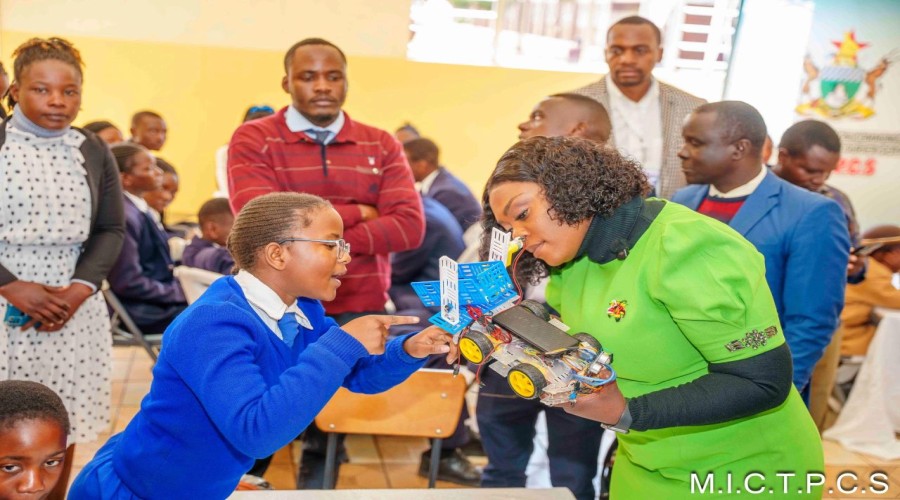
announcement was made by the Minister of Information Communication Technology,
Postal and Courier Services, Tatenda Mavetera, during the ANRAIC 2026 Challenge
held at Tynwald Primary School.
Mavetera
said the initiative aligns with President Emmerson Mnangagwa's Vision 2030,
which seeks to transform Zimbabwe into an innovation-driven,
upper-middle-income economy by investing in human capital from an early age.
According
to the minister, the government aims to shift the country's focus from
technology consumption to technology creation by equipping learners with the
skills needed to become innovators, researchers and problem-solvers capable of
developing home-grown digital solutions.
She
said the rollout of the programme will be supported by three key pillars:
expanding digital infrastructure, implementing the National Artificial
Intelligence Strategy 2026–2030 and strengthening online safety for children.
As
part of the infrastructure component, the government will continue expanding
the Presidential Internet Scheme and the One Learner, One Device Initiative in
collaboration with the Ministry of Primary and Secondary Education to improve
equitable access to digital learning tools.
Mavetera
said the National AI Strategy provides the policy framework for developing
local digital talent, encouraging the responsible use of artificial
intelligence and strengthening partnerships that support innovation and
technology development.
She
added that government is also reinforcing the National Child Online Protection
Policy to ensure that digital learning environments remain safe and secure,
with measures aimed at addressing cyberbullying and protecting children from
online exploitation.
The
minister emphasized that close collaboration between the Ministry of ICT,
Postal and Courier Services and the Ministry of Primary and Secondary Education
will be critical to the successful implementation of the programme.
Planned
interventions include teacher training, the establishment of additional
robotics clubs and expanded digital skills programmes designed to prepare
students for careers in science, technology and innovation.
Mavetera
said the long-term objective is to equip learners with practical skills that
can be applied to solving national development challenges in sectors such as
agriculture, healthcare, mining and other strategic industries.
She
also called on private sector organizations and development partners to support
the initiative through investment, technical expertise and collaboration to
help build Zimbabwe's future digital workforce.