By: Nana
Appiah Acquaye
Kenya has called for greater
cooperation among middle and lower-income countries to strengthen their
capabilities across the artificial intelligence value chain, including
computing power, data, skills, models and AI governance.
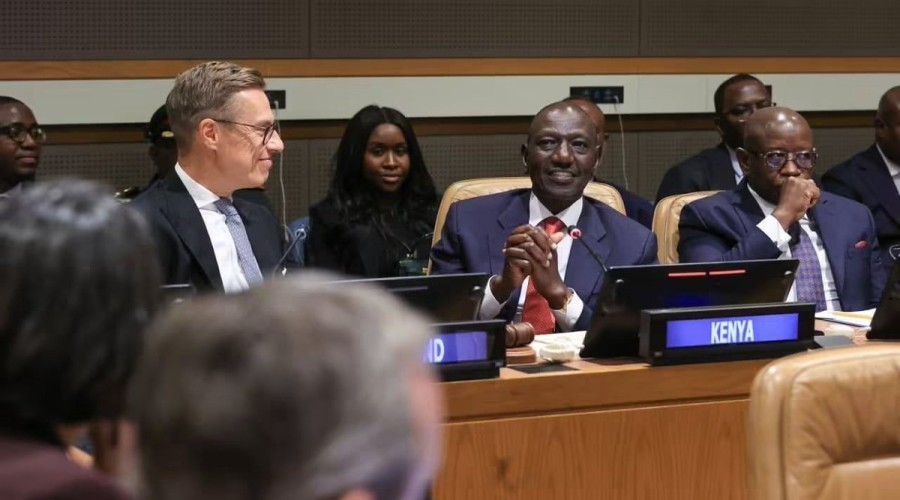
The proposal was outlined
during the leaders’ roundtable on “AI Middle Powers: Shared Sovereignty in the
AI Era,” held in New York on the margins of the 81st Session of the United
Nations General Assembly. The roundtable was co-chaired by Kenya’s President
William Ruto and Finland’s President Alexander Stubb, with Sierra Leone
President Julius Maada Bio also participating.
According to Kenya’s Cabinet
Secretary for Information, Communications and the Digital Economy, William
Kabogo Gitau, middle and lower-income countries do not control the entire AI
value chain, from energy and chips to data, models, skills and rules, with each
country depending on others for parts of the ecosystem.
For Kenya, Kabogo identified
computing power at scale and the development of advanced models as key gaps in
the country’s AI capabilities.
He said Kenya nevertheless
brings several assets to the AI ecosystem, including firm renewable power,
eight submarine cable landings, the Konza National Data Centre, a young
technical workforce and African language data.
Kabogo also pointed to
Kenya’s institutional capabilities, including its data protection law and
digital public services used by millions of Kenyans every month.
Against this backdrop, Kenya
proposed that middle and lower-income countries cooperate in areas where they
do not compete, including agreeing common terms in their engagements with
suppliers of AI models and computing power.
The proposal also includes
jointly testing and assuring AI systems and building data in African and other
local languages under the ownership of the institutions that generate and
manage the data.