By: Nana
Appiah Acquaye
The East African Community
(EAC) has adopted a regional El Niño Emergency Preparedness and Response Plan
to coordinate action among its eight Partner States as climate scientists warn
that a potentially very strong El Niño event could bring above-normal rainfall
across much of the region through February 2027.
The Plan was adopted on 6
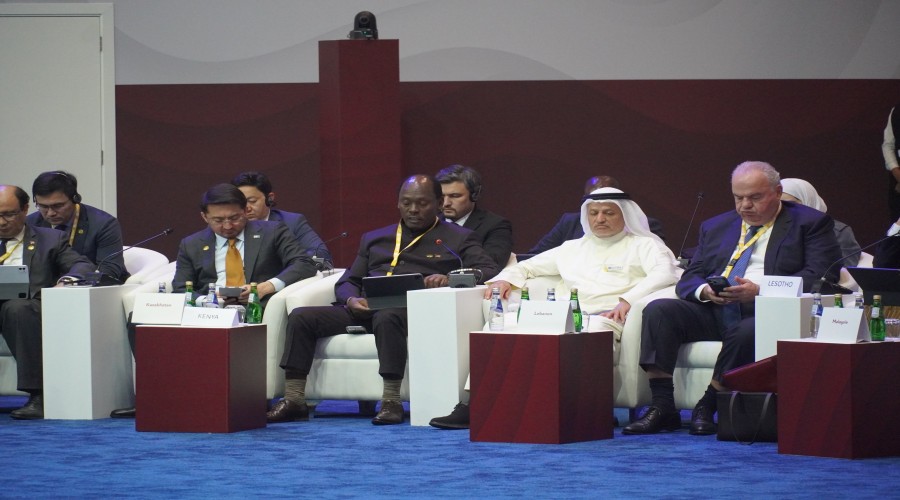
November 2026 during the Ministerial Session of the Extraordinary Meeting of
the Joint Sectoral Council on Cooperation in Defence Affairs, Interstate
Security and Foreign Policy Coordination. The meeting was chaired by Uganda’s First
Deputy Prime Minister and Minister of East African Community Affairs, Rt. Hon.
Rebecca Alitwala Kadaga, who also chairs the EAC Council of Ministers.
Addressing the meeting,
Kadaga stressed the urgency of coordinated regional preparedness, warning that
the consequences of failing to prepare could be severe for lives, livelihoods
and regional stability.
“This meeting is not
routine; it is urgent,” she said. “The scientists have issued their warnings,
and the clouds are gathering over Lake Victoria, the highlands of Burundi and
Rwanda, Mount Elgon, Mount Kenya and the Indian Ocean. El Niño is here.”
She recalled the impact of
previous El Niño events, particularly those of 1997 and 2023–24, arguing that
the region must avoid responding through separate national efforts.
“We have learnt the hard
way, from 1997 to 2023–24, that the cost of unpreparedness is always higher
than the cost of preparedness. Our Heads of State have directed that we must
never again respond as eight separate countries,” Kadaga said.
The EAC Chairperson also
called for transport corridors to be recognised as protected regional assets,
supported by a joint corridor contingency plan, prepositioned emergency bridges
and round-the-clock information on road conditions.
She emphasised the
importance of ensuring that transport operators receive timely information on
the accessibility of critical routes, noting that “a truck driver in Mombasa
should know before he departs whether Malaba is passable.”
Kadaga urged development
partners to support national and regional preparedness efforts while calling on
Partner States to commit domestic resources towards implementing the plans.
“The people of East Africa,
from Kisumu to Kigoma and from Goma to Garissa, do not want reports. They want
assurance that their governments are ready. El Niño must find East Africa
ready, coordinated and united,” she said.
The IGAD Climate Prediction
and Applications Centre (ICPAC), which briefed the meeting on the evolving
climate outlook, reported that El Niño is firmly established and expected to
strengthen, potentially reaching very strong intensity. A positive Indian Ocean
Dipole is also likely to amplify its effects.
ICPAC indicated that
above-normal rainfall is likely across most of the region during the
October–December period, with the strongest rainfall signal expected over
eastern Kenya and central to southern Somalia.
“The science leaves no
doubt, El Niño is already here, and there is a near 100% probability that it
will persist through February 2027. The question for our region is no longer
whether El Niño will come, but how ready we are when the rains peak,” said Mr.
Calistus Wachana of ICPAC.
The adoption of the regional
preparedness and response plan marks a commitment by EAC Partner States to
strengthen coordination and preparedness in anticipation of the expected heavy
rains and their potential impact on communities, infrastructure, transport
networks and regional economic activities.