By: Nana
Appiah Acquaye
Angola has highlighted the
strategic role of its national communications satellite, ANGOSAT-2, in
expanding telecommunications services, strengthening connectivity and promoting
digital inclusion, particularly in rural and hard-to-reach communities.
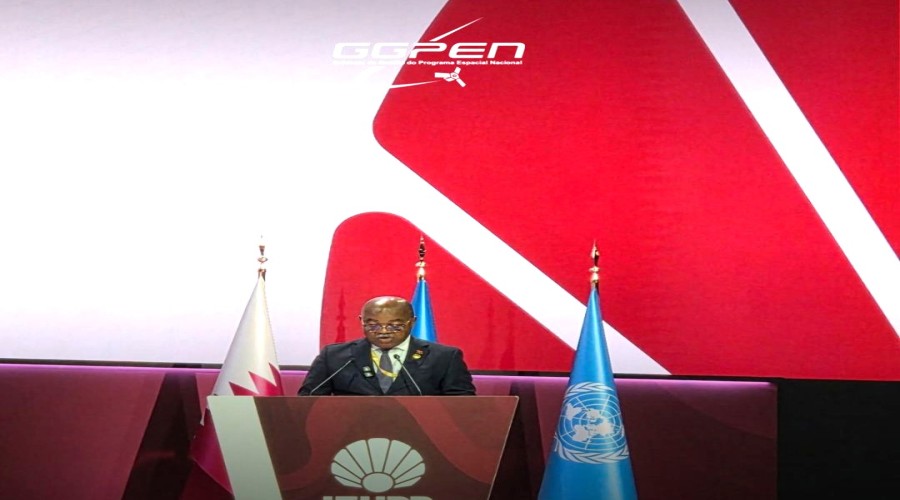
The Minister of
Telecommunications, Information Technologies and Social Communication, Mário
Augusto da Silva Oliveira, outlined the satellite's contribution during his
address at the Ministerial Round Table of the 2026 International
Telecommunication Union (ITU) Plenipotentiary Conference in Doha, Qatar.
Presenting Angola's major
advances in the telecommunications and information technology sector, Mário
Oliveira identified the launch of ANGOSAT-2 in 2022 as a milestone in the
country's National Space Programme, which has strengthened connectivity capacity
in Angola and the wider region.
He particularly highlighted
the Conecta Angola Project, made possible by ANGOSAT-2, which has extended
telecommunications services and internet access to communities previously
without coverage, especially in rural and hard-to-reach areas.
According to the minister,
these investments have contributed to expanding communication services,
promoting digital literacy and improving Public Administration services,
demonstrating the role of space technologies in the country's socio-economic
development and digital transformation.
The recognition of ANGOSAT-2
at the international telecommunications conference reinforces the strategic
relevance of Angola's National Space Programme in advancing the government's
priorities for connectivity and digital inclusion.
Beyond satellite
infrastructure, Mário Oliveira also outlined other major investments supporting
the country's digital transformation, including the expansion of the National
Broadband Network based on optical fibre and the implementation of the Iluminar
Angola Project.
The Iluminar Angola Project
is based on national roaming and infrastructure sharing between
telecommunications operators, while Angola's international connectivity has
been strengthened through its integration into four submarine cable systems:
SAT-3, WACS, SACS and 2Africa.
The minister also
highlighted progress in the country's legislative framework, including
instruments covering electronic signatures, digital certification and
cybersecurity, as well as the preparation of a national Artificial Intelligence
Law and Strategy.
At the conclusion of his
address, Mário Oliveira reaffirmed Angola's commitment to strengthening
international cooperation, emphasising the importance of the ITU in promoting
universal access to information and communication technologies.