
Ethiopia launches National Agroecology Strategy to drive sustainable food systems
Date: 2026-03-24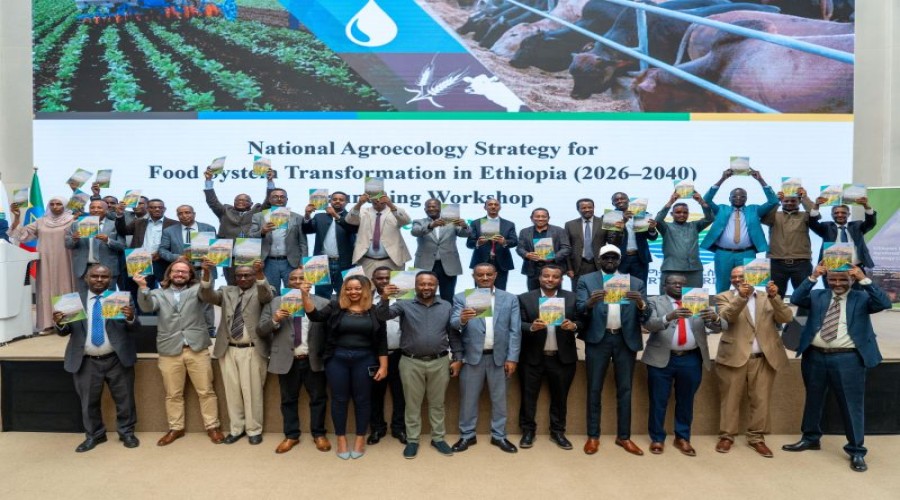
By: Nana Appiah Acquaye
Ethiopia
has launched its National Agroecology Strategy (2026–2040), marking a
significant step toward building climate-resilient, inclusive, and sustainable
food systems.
The
strategy positions agroecology at the center of the country’s agricultural
transformation agenda, with a focus on restoring landscapes, strengthening
farmer-centered practices, and scaling sustainable farming methods nationwide.

The
initiative is being supported by the Alliance of Bioversity International and
CIAT, working in collaboration with CIFOR-ICRAF under the European Union-funded
TRANSITIONS programme. The programme is managed by the International Fund for
Agricultural Development.
Officials
say the strategy aligns with Ethiopia’s broader priorities in restoration and
agroforestry, providing a structured pathway to integrate sustainable
agricultural practices into national development plans.
The
framework is also designed to translate policy into practical, investment-ready
solutions, enabling farmers and stakeholders to adopt approaches that enhance
productivity while preserving environmental resources.

The
launch underscores Ethiopia’s commitment to leveraging science-based and
locally adapted solutions to address food security challenges and climate
change, while promoting long-term sustainability across its agricultural
sector.