EU-backed REACH Project strengthens climate resilience for farmers in Northern Ghana
Date: 2026-03-24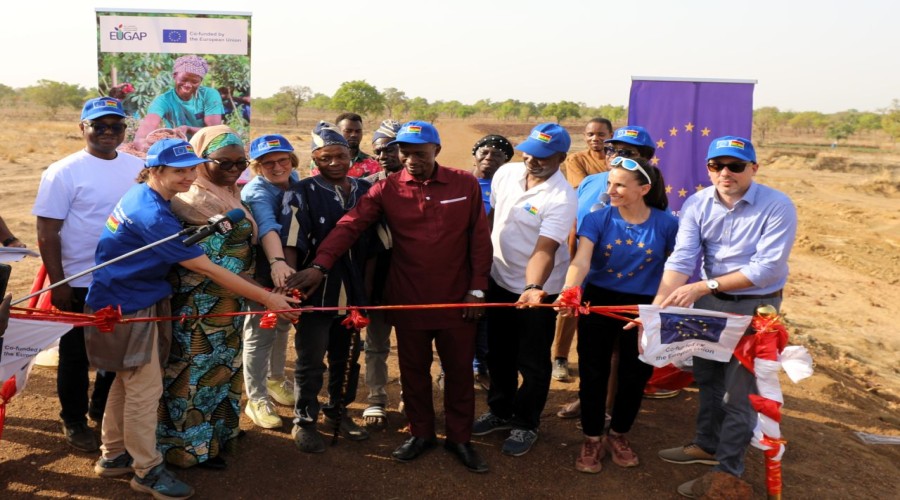
By: Robert Kwaku Annor
GIZ
Ghana has highlighted the impact of the EU-funded Resilience Against Climate
Change (REACH) project, which has strengthened the adaptive capacity of
smallholder farmers across Northern Ghana over the past eight years.
Implemented
under the European Union Ghana Agriculture Programme, the REACH initiative has
supported more than 200 communities through infrastructure development and the
promotion of sustainable agricultural practices.

According
to project partners, recent field visits conducted with the Ministry of Food
and Agriculture Ghana and the European Union demonstrated tangible outcomes
across beneficiary communities.
Key
interventions include the construction of a 150-metre irrigation canal in Duori
and the rehabilitation of dams in Buka and Duang, enabling year-round farming
and improving water access for agricultural activities. In addition, cold
storage facilities established in Duang are helping to reduce post-harvest
losses and strengthen vegetable value chains.
The
project has also supported capacity building through the development of a
student hostel at the Babile Agricultural Station, enhancing training
opportunities in conservation agriculture.

In
total, more than 200 community-driven infrastructure projects have been
delivered through participatory planning approaches, ensuring local ownership
and long-term sustainability.
Although
the implementation phase of the REACH project has concluded, stakeholders say
its impact will continue through strengthened local systems and alignment with
national agricultural and climate resilience strategies.