By:
Nana Appiah Acquaye
Zimbabwe
National Geospatial and Space Agency has partnered with local and international
institutions to enhance air quality monitoring capacity through a joint
initiative combining satellite data and ground-based sensors.
The
project, titled “Improving Zimbabwe’s capacity for air quality monitoring from
the ground and by TROPOMI (AQ4ZIM_ZW_NL),” was implemented under the EO-Africa
programme in coordination with the European Space Agency and the African Union
Commission.
The
initiative brought together experts from Zimbabwe and international partners,
including the Environmental Management Agency Zimbabwe, the Royal Netherlands
Meteorological Institute, and the University of Twente, to develop integrated
air quality monitoring systems.
The
project focused on combining satellite-derived air quality data with in situ
measurements from ground sensors to improve environmental monitoring and
analysis. As part of the implementation, 11 IQAir sensors were installed to
measure pollutants including PM1, PM2.5, PM10, and carbon dioxide.
Technical
development was supported through the EO-Africa Innovation Lab, which provided
access to extensive satellite datasets and tools for algorithm development and
data processing.
A
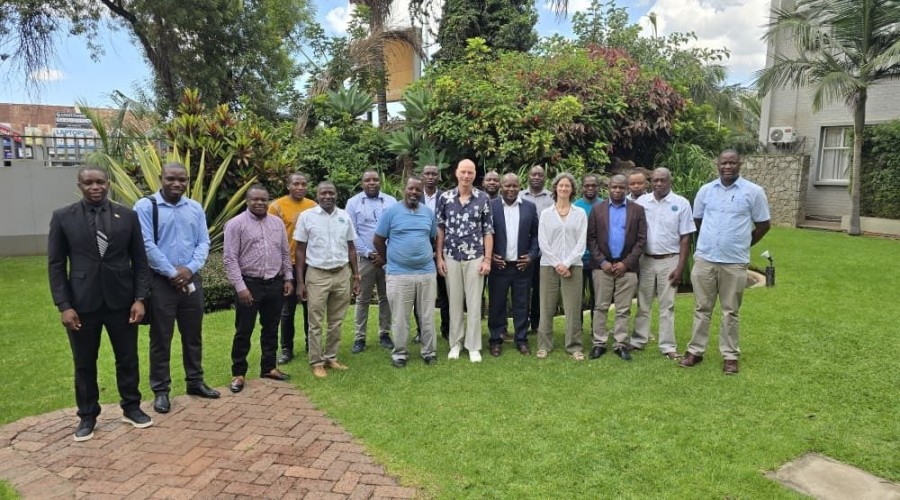
project closure meeting was held in Harare to mark the completion of the
initiative, with stakeholders highlighting the importance of collaborative
approaches in addressing environmental challenges and strengthening national
capacity in air quality monitoring.
Officials
noted that the project represents a significant step toward leveraging
space-based technologies and data-driven solutions to support environmental
management and public health outcomes in Zimbabwe.