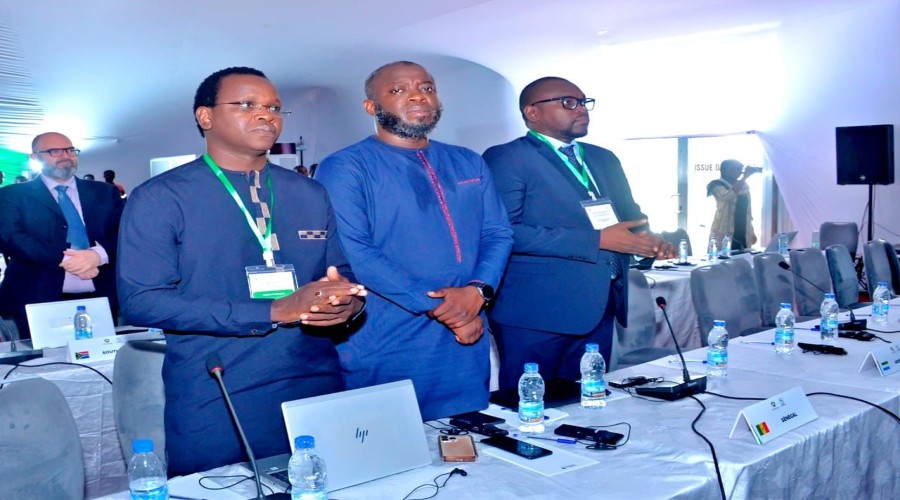
Ghana approves $250 million AI centre to accelerate digital innovation agenda
Date: 2026-04-01
By: Nana Appiah Acquaye
Ghana’s
Cabinet has approved a $250 million investment to establish a national
artificial intelligence (AI) computer centre, marking a significant step in the
country’s efforts to strengthen its digital economy and position itself as a
leading hub for responsible AI innovation in Africa.
The
centre is expected to support AI research, development, and deployment across
key sectors, including agriculture, healthcare, education, and financial
services. The initiative forms part of the government’s broader strategy to
leverage emerging technologies to drive economic transformation and improve
public service delivery.

The
Minister for Communication, Digital Technology and Innovations, Hon. Samuel
Nartey George, disclosed the development during a National Stakeholder
Engagement on Ghana’s AI Readiness Assessment Methodology (RAM) Report held on
March 31, 2026, at the Best Western Premier Hotel in Accra. The event was
convened by the Ministry in partnership with the United Nations Educational,
Scientific and Cultural Organization (UNESCO), with funding support from the
European Union.
According
to the Minister, Cabinet has also approved Ghana’s National Artificial
Intelligence Strategy, which is scheduled for official launch on April 24,
2026. He described the approvals as a milestone in the country’s digital policy
journey and a decisive step toward building a globally competitive AI
ecosystem.
He
noted that the strategy would drive AI adoption across all sectors of the
economy while ensuring that development is guided by principles of
responsibility, innovation, and inclusivity. He added that the initiative aims
to position Ghana at the forefront of AI development on the African continent.
The
Minister explained that the UNESCO AI Readiness Assessment Methodology provides
a comprehensive framework for evaluating national preparedness across areas
such as governance, infrastructure, data ecosystems, research capacity,
economic readiness, and ethical safeguards. He indicated that findings from the
assessment would inform policy direction and implementation planning.

He
identified four priority focus areas under the strategy: strengthening data
governance systems, investing in AI research and computing infrastructure,
expanding AI education and digital skills, and embedding ethical considerations
in AI deployment.
Ghana’s
strong mobile penetration, which exceeds 110 percent with approximately 38
million mobile subscriptions, was highlighted as a key enabler for AI-driven
innovation and digital service expansion.
The
Minister further emphasized Ghana’s strategic position within Africa’s digital
economy, noting that the presence of the African Continental Free Trade Area
Secretariat in Accra enhances the country’s role in shaping the continent’s
digital trade ecosystem.
The
establishment of the AI centre is expected to serve as a catalyst for
innovation, attract investment, and foster collaboration between government,
academia, and the private sector, as Ghana advances its ambition to become a
leading digital and technology hub in Africa.