By:
Nana Appiah Acquaye
Global
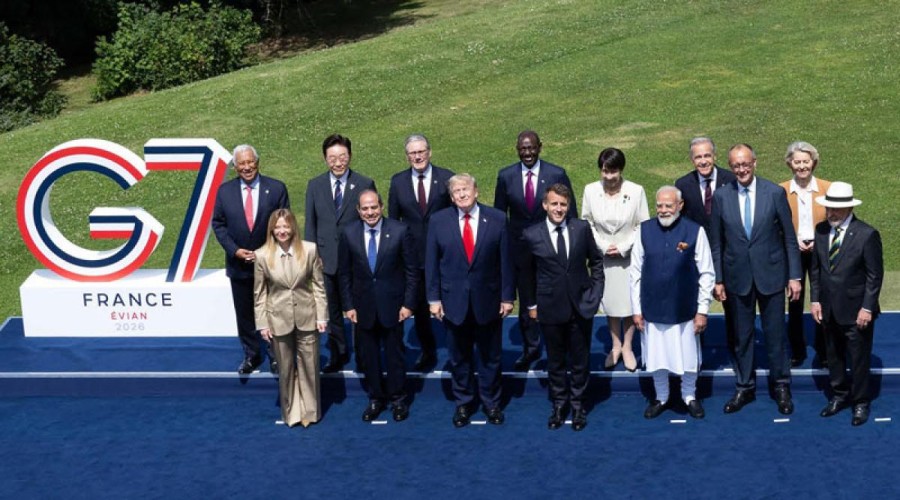
political leaders and senior technology executives met in France during the G7
Summit to deliberate on the growing impact of artificial intelligence on
geopolitics, economic systems, and international security.
The
meeting brought together heads of state and government from the United States,
Canada, the United Kingdom, France, Germany, Italy, Japan, and the European
Union, alongside leading figures from the global artificial intelligence
industry.
Among
the participating technology leaders were Sam Altman of OpenAI, Dario Amodei of
Anthropic, Demis Hassabis of Google DeepMind, Arthur Mensch of Mistral, as well
as representatives from Cohere, Meta, Salesforce, Synthesia, Sakana AI, and
other major AI and technology firms.
Discussions
extended beyond artificial intelligence to broader global concerns, including
international security, trade relations, energy systems, critical minerals,
supply chain resilience, and global economic growth.
A
key focus of the engagement was the governance and regulation of artificial
intelligence, particularly in relation to online safety, access to advanced AI
systems, and the increasing dependence of governments and economies on
privately developed technologies.
The
meeting also highlighted ongoing debates around recent United States
restrictions on advanced AI models and Europe’s push toward greater
technological sovereignty and reduced dependence on external AI infrastructure.
European
leaders, including French President Emmanuel Macron and European Commission
President Ursula von der Leyen, reportedly emphasized the need for improved
access to advanced AI capabilities among allied nations while accelerating the
development of domestic AI infrastructure within Europe.
The
presence of senior AI executives alongside global political leaders reflects
the increasing role of technology companies in shaping international policy
discussions and strategic decision-making.
Observers
noted that the engagement underscores a growing shift in global governance,
where artificial intelligence is becoming a central factor in discussions on
economic competitiveness, national security, and geopolitical influence.