By: Nana
Appiah Acquaye
Nigeria has taken a
significant step toward establishing a National Artificial Intelligence (AI)
Trust following a high-level co-creation workshop in London that brought
together researchers, academics, policymakers, industry experts,
philanthropies, and public interest organisations.
The initiative follows the
approval of the National AI Trust by Nigeria’s Federal Executive Council (FEC),
a move aimed at ensuring long-term leadership and governance of artificial
intelligence development and deployment in the country.
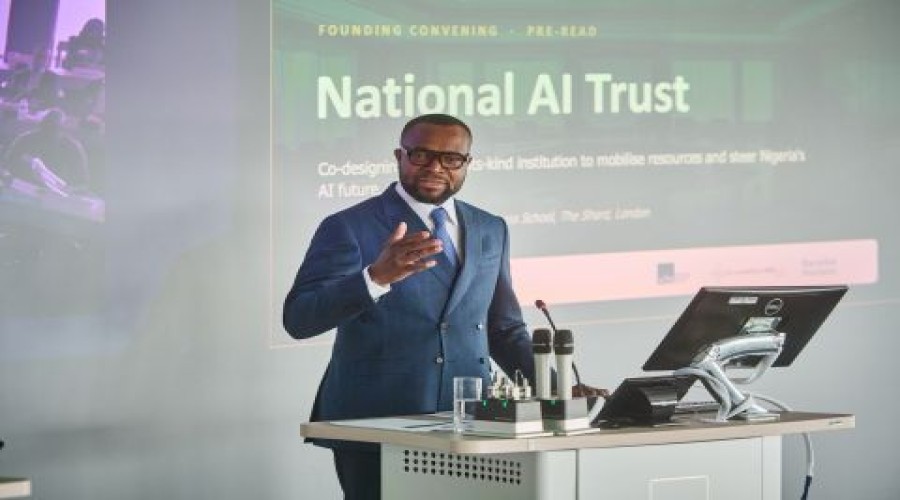
According to Nigeria’s
Minister of Communications, Innovation and Digital Economy, Bosun Tijani, the
workshop marked the beginning of the process to establish what is being
described as a first-of-its-kind institutional framework designed to provide
sustainable stewardship for AI in Nigeria.
The proposed National AI
Trust is envisioned as a body of trustees that will help guide the development
and application of artificial intelligence technologies in ways that deliver
broad-based economic and social benefits for Nigerians. The initiative comes as
countries around the world increasingly seek to establish governance structures
capable of managing the opportunities and challenges associated with rapidly
advancing AI technologies.
Speaking on the importance
of the initiative, Tijani noted that as artificial intelligence becomes a
critical driver of economic competitiveness, countries must focus not only on
building technological capabilities but also on creating institutions that can
support responsible and sustainable innovation.
The London workshop provided
an opportunity for Nigerian stakeholders to engage with global experts and draw
on diverse perspectives to shape the future direction of the National AI Trust.
Discussions focused on governance frameworks, institutional design, and
strategies for ensuring that AI development aligns with national development
priorities.
During the visit, Tijani
also participated in a keynote conversation at University of Warwick’s Warwick
Business School, where he discussed global perspectives on artificial
intelligence, institutions, and national competitiveness. The session explored
Nigeria’s approach to building the talent, infrastructure, digital public
infrastructure, and institutional capacity needed to compete in an increasingly
AI-driven global economy.
The minister highlighted the
country's ongoing efforts to strengthen its digital ecosystem through
investments in innovation, skills development, and technology infrastructure,
positioning Nigeria as a key player in Africa's emerging AI landscape.
The workshop was organised
with support from the MacArthur Foundation, Co-Creation
Hub (CcHUB), and the University of Warwick. Participants contributed
insights intended to help shape the governance and operational framework of the
proposed National AI Trust.
The initiative forms part of
Nigeria’s broader strategy to leverage artificial intelligence and emerging
technologies to drive innovation, economic growth, and national development
while ensuring that the benefits of technological advancement are shared across
society.
As global competition in
artificial intelligence intensifies, the establishment of the National AI Trust
is expected to play a central role in strengthening Nigeria’s institutional
readiness and positioning the country as a leader in responsible AI development
and governance in Africa.