By: Nana Appiah Acquaye
The Science
for Africa (SFA) Foundation has renewed calls for increased investment in
African-led health innovation, stressing the importance of strengthening local
research ecosystems and supporting innovators throughout the entire innovation
lifecycle.
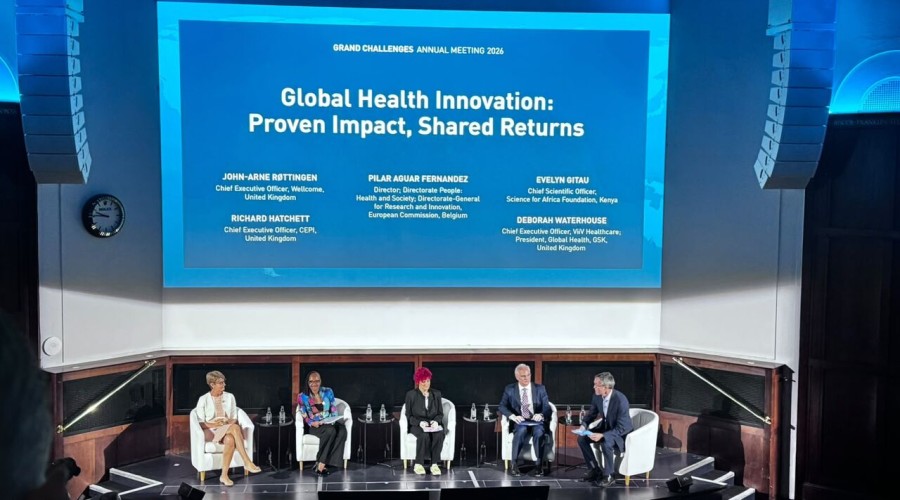
Speaking during the opening
plenary session of the Grand Challenges Annual Meeting, the Foundation's Chief
Scientific Officer, Dr. Evelyn Gitau, joined global leaders from Wellcome,
CEPI, the European Commission, and ViiV Healthcare/GSK for a discussion on
"Global Health Innovation: Proven Impact, Shared Returns."
During the session, Dr.
Gitau reflected on more than a decade of progress achieved through Grand
Challenges Africa, highlighting how sustained investments in science, research,
and innovation have enabled African innovators to develop solutions addressing
critical health and development challenges across the continent.
She noted that these
investments have helped strengthen local scientific leadership while generating
impactful innovations that are improving lives and contributing to economic
development.
As an example of Africa's
growing innovation capacity, Dr. Gitau pointed to emerging artificial
intelligence-driven healthcare solutions in Tanzania. She said such innovations
demonstrate how African researchers and entrepreneurs are developing technologies
capable of addressing local challenges while offering lessons and applications
beyond national borders.
Addressing the future of
global health financing, Dr. Gitau argued that Africa has consistently
demonstrated its ability to deliver high-impact research despite operating in
resource-constrained environments. However, she emphasized that greater
attention must now be given to supporting the full innovation pathway,
including research, product development, commercialization, deployment, and
scale-up.
She also highlighted the
need to strengthen critical enablers such as regulatory frameworks, supply
chains, financing mechanisms, and local innovation ecosystems to ensure that
scientific discoveries translate into sustainable solutions.
According to Dr. Gitau,
while international partnerships remain vital to advancing global health
outcomes, long-term success will depend on empowering African institutions and
leaders to drive their own innovation agendas.
"If we invest properly
from end to end, we create the conditions for both sovereignty and
sustainability," she said.
The SFA Foundation maintains
that deeper collaboration, stronger coordination, and sustained support for
locally led innovation will be essential to addressing Africa's health
challenges and advancing global health security in the years ahead.