By: Nana
Appiah Acquaye
Sierra Leone has positioned
its new open source policy as a response to longstanding challenges in
government technology, including duplication of digital systems, rising costs,
lack of interoperability and dependence on technology vendors.
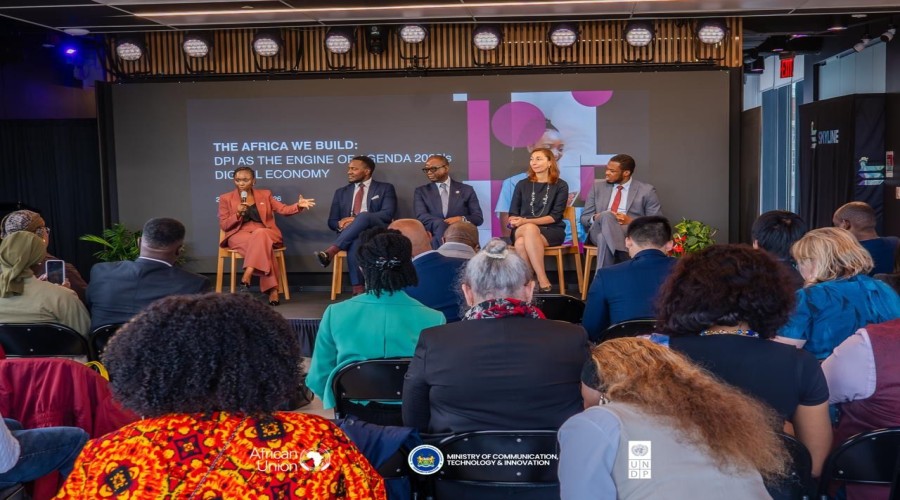
Speaking at an event on
Sierra Leone’s Open Source Journey, the Minister of Communication, Technology
and Innovation said the policy was the result of a long process rather than an
initiative that began with its launch.
“This is not something we
developed starting today,” the Minister said, placing the policy within a
journey that began with Sierra Leone’s membership of the Digital Public Goods
Alliance (DPGA) and continued with support from partners to develop the policy.
She said the policy emerged
from a practical gap within government. During engagements with colleagues
about the digital work being undertaken across ministries, there was no policy
document to guide discussions around open source and, in some cases, no clear
mandate for such work.
According to the Minister,
the policy is designed to address four key challenges facing government
technology development.
These include government
institutions developing similar systems at the same time, increasing costs
resulting from reliance on proprietary technology, digital systems that cannot
communicate with one another, and vendor lock-in that prevents government from
receiving the full benefit of technology purchased with public funds.
The Minister also
highlighted Sierra Leone’s Digital Public Goods (DPG) pipeline as the country’s
contribution to the global conversation on open source and digital public
infrastructure.
She described the pipeline
as one of the most exciting elements on display and said Sierra Leone was proud
of the work being undertaken.
The Minister further linked
Digital Public Infrastructure (DPI), Digital Public Goods and artificial
intelligence as interconnected elements of the country’s digital transformation
agenda, building on discussions held earlier in the day involving the African
Union and the United Nations Development Programme.
She acknowledged that
implementation of the approach may not yet be perfect but described the current
stage as an important starting point.
The Minister invited
partners to work with Sierra Leone, including by using the country as a
test-case environment to improve the policy and assess how its approach could
potentially be adapted for other countries.
She expressed appreciation
to UNICEF, the Digital Public Goods Alliance, Norway, the World Bank and
private sector partners for their participation and contributions to the
showcase.
Sierra Leone’s open source
policy and DPG pipeline are intended to strengthen coordination across
government technology initiatives while supporting interoperable digital
systems and reducing dependence on proprietary solutions.