By: Van Soul Addey
Angola has trained 8,987
citizens through 74 training activities across 16 provinces over the past 12
months as the country strengthens its National Space Programme (PEN), with a
greater focus on training, scientific research, innovation and international
cooperation.
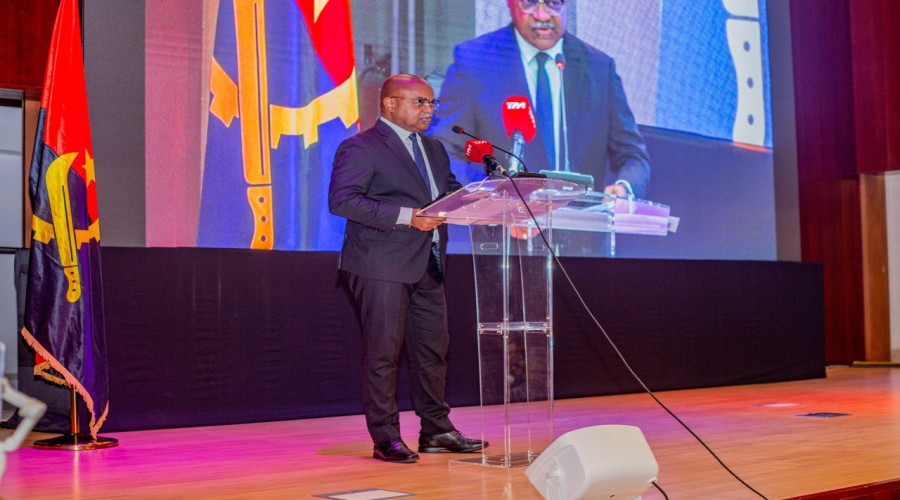
The Minister of
Telecommunications, Information Technologies and Social Communication, Mário
Oliveira, announced the progress on Monday, 12 October, in Luanda, during the
closing session of World Space Week 2026, held from 4 to 10 October under the
theme “Rocket Revolution”.
Oliveira said the National
Space Programme was taking on a dimension increasingly oriented towards
responding to the country’s concrete challenges.
He said space technologies
already had relevant applications in agriculture, natural resource management,
environmental monitoring, disaster prevention, spatial planning,
telecommunications and the improvement of public services.
The minister also
highlighted the certification of 148 technicians from the 21 provinces, trained
in the use, management and interpretation of data and services provided by
satellites.
“There is no technological
sovereignty without people prepared to create, operate and develop technology,”
Oliveira said, advocating the preparation of a new generation of engineers,
technicians and researchers to sustain the next phase of the National Space
Programme.
In international
cooperation, Angola has established 20 new cooperation agreements over the past
12 months, including partnerships with the space agencies of Nigeria and the
United Arab Emirates.
Oliveira said the
partnerships would strengthen the exchange of knowledge, specialised training,
the development of joint projects and access to advanced technologies.
He also highlighted the
importance of bringing science and space technology closer to young people,
schools and universities to stimulate creativity, scientific curiosity and the
emergence of new national talent.
The government intends to
consolidate the space sector as an instrument of economic and social
development, inclusion and technological sovereignty, ensuring that investments
produce concrete benefits for the population.