By:
Nana Appiah Acquaye
The
International Telecommunication Union (ITU) has ranked Somalia as the world’s
leading performer in telecommunications regulatory reform growth between 2007
and 2024, according to its latest ICT Regulatory Tracker report released in May
2026.
The
report indicates that Somalia recorded the highest global improvement in ICT
regulatory development over the period, with its score increasing from 0.0 in
2007 to 77.5 in 2024. This represents a total gain of 77.5 points, placing the
country first among 15 nations identified for significant progress in ICT
governance reforms.
The
ITU ICT Regulatory Tracker assesses the maturity of telecommunications and
digital regulatory frameworks across 194 countries worldwide. Following its
latest performance, Somalia has been elevated into the ITU’s Generation 3 (G3)
regulatory category, which is characterised as an enabling environment for
investment and expanded access to digital services.
The
progress follows major reforms implemented since the establishment of the
National Communications Authority (NCA) in 2018 under Somalia’s National
Communications Law. The NCA has since introduced a range of regulatory
frameworks, including unified licensing systems, interconnection regulations,
spectrum management policies, national frequency planning, quality-of-service
standards, consumer protection measures, and numbering regulations.
Commenting
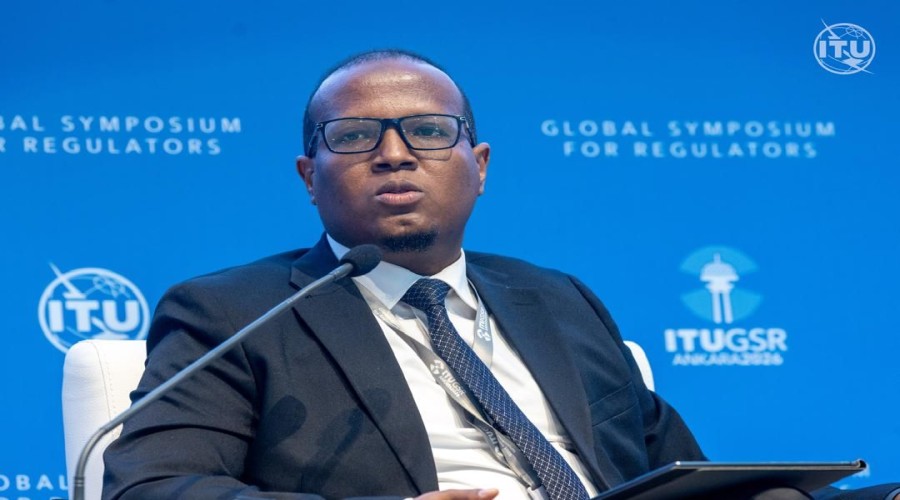
on the development, Director General of the NCA, Mustafa Yasin Sheikh, said the
recognition reflects Somalia’s sustained efforts to build an independent and
credible regulatory institution supported by a modern legal framework for the
telecommunications sector.
He
noted that Somalia’s progress demonstrates strengthened collaboration between
government institutions, private sector operators, and international
development partners in advancing the country’s digital transformation agenda.
Mary
Porter Peschka, Regional Director for Eastern Africa at the International
Finance Corporation (IFC), also welcomed the milestone, describing it as a
significant turnaround driven by sustained reforms and institutional
strengthening. She highlighted IFC’s support through technical assistance in
interconnection regulations, submarine cable frameworks, dispute resolution
mechanisms, and structured stakeholder engagement processes.
She
further emphasized that digital connectivity plays a central role in enabling
economic opportunity, productivity, and access to essential services, including
digital financial systems.
Somalia’s
achievement is being viewed as a significant milestone in its digital
transformation journey, with stakeholders expressing optimism about continued
reforms aimed at improving connectivity, affordability, and service delivery
across the country.