Your food peels could power your wristwatch
Date: 2026-04-12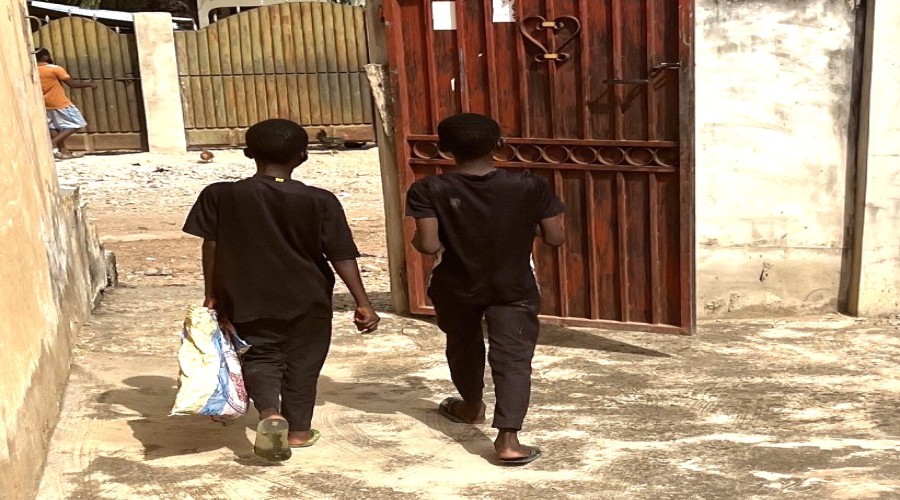
By: Afia Agyapomaa Ofosu
In
the quiet evenings in Ablekuma-Fanmilk, a suburb in Ghana’s Greater Accra
region, thirteen-year-old Abdul Latif and his younger brother, Ali, walk from
house to house carrying a small sack. They're not begging. They're collecting
cassava peels, plantain skins, and yam remains to feed the goats and sheep at
home. On rainy days, they spread the peels in the sun to dry first.
This
simple act is familiar across many Ghanaian homes. Families feed cooked
leftovers to animals and turn peels into compost. Yet Africa still wastes
around 195
million tonnes of food every year. Much of this waste ends up in landfills,
where it rots and releases harmful methane gas, contributing to climate change.
A
2024 study
in Waste Management & Research by Daniel Mmereki and colleagues shows that while composting and
biogas from food waste hold great promise, many African countries are not yet
making full use of them. Policies, awareness, and investment remain limited.
Far
from the streets of Accra, something exciting is happening at Imperial College London’s
South Kensington Campus. In the sustainable energy solutions laboratory of the
Department of Chemical Engineering, two scientists are looking at the same food
waste in a completely new way.
Turning Peels into Battery Power

Dr. Kamogelo Modisane on food waste batteries
Dr Kamogelo
Modisane, a chemist from South Africa, works with trays of dried organic
material. To her, these are not mere kitchen leftovers.
“We
use things you can find in your own home,” she says. “Anything with starch,
lignin and cellulose (things people throw away every day) can become a source
for our battery materials.”
She
and her colleague dry, grind, and heat the peels.
“We
are basically cooking the material,” she says with a gentle laugh.
This
process creates a special hard carbon for battery anodes.
“This
anode is used in pouch cells. So, when you think about the battery in your
power bank or some watches, it’s likely this type.”
Instead
of relying on expensive imported materials, the team uses sodium and locally
available African minerals such as iron and vanadium (a metal used in some
batteries).
“We're
trying to move away from critical materials like lithium, cobalt, and graphite,”
Dr Modisane explains. “With biomass and locally available minerals, we can make
batteries without worrying about shortages.”
Two
Scientists, One Shared Purpose

Dr Priya Shanmuga explains battery innovation
Working
alongside her, Dr Priya Shanmuga focuses on aluminium-based batteries. Using advanced coating techniques, she
strengthens the surface of aluminium to make the batteries last longer.
“Aluminium
is cheaper and widely available,” she says. “By modifying the surface, we
improve how long the battery can last.”
Together, these scientists are building cleaner, smarter energy solutions from materials that are already part of everyday life in Africa.
Speeding Up
Discovery
Science
journalists from West Africa, including Ghana and Nigeria, who visited the lab
saw this innovation come alive at DIGIBAT
(the UK’s first self-driving laboratory for energy research). Here, artificial
intelligence and robots work together to test new materials rapidly. What once
took years can now be done in months.
The
young boys in Ablekuma and the scientists in London are connected by the same
thing: food waste. They use it to feed animals. The others transform it into
energy storage. What was once thrown away may soon power small devices and, one
day, support larger clean energy systems across Africa.
The
next time you see yam peels or plantain skins, remember this journey. From a
home in Accra to a world-class lab in London, humble scraps are becoming part
of something much bigger. With creativity and care, yesterday’s waste can help
build a brighter, more self-reliant tomorrow.
This report is part of the UK-Ghana ST&I Media Training
Programme.
The writer is a science journalist.
E-mail: prissyof@yahoo.com