Meta unveils project Waterworth Subsea Cable at South Africa investment conference
Date: 2026-04-13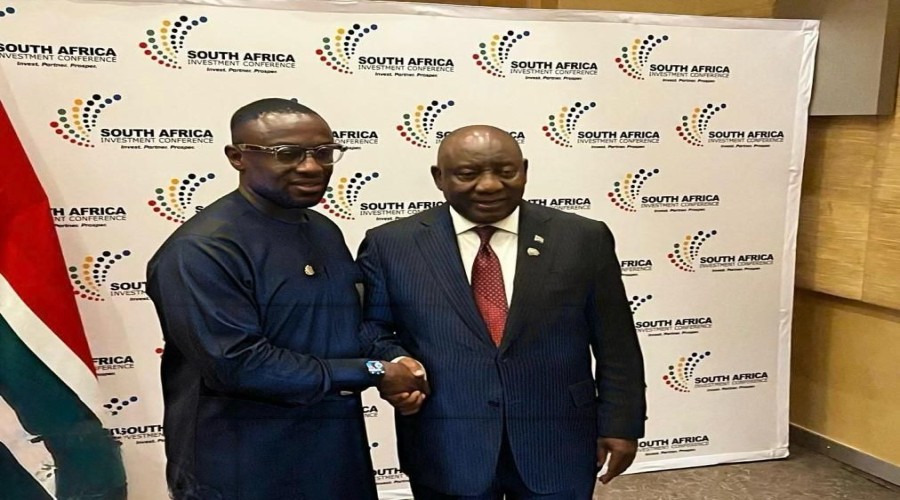
By: Nana Appiah Acquaye
Meta
has announced plans to develop a new subsea cable system, Project Waterworth,
aimed at significantly expanding global connectivity and strengthening South
Africa’s role as a digital gateway for the continent.
The
announcement was made during the 6th South Africa Investment Conference,
attended by President Cyril Ramaphosa, government officials, and private sector
leaders. The project, described as Meta’s most ambitious subsea cable
initiative, will span more than 50,000 kilometres across five continents, with
three landing points in South Africa—one in KwaZulu-Natal and two in the
Western Cape.

According to Kojo Boakye, Vice President, Public Policy, Africa, Middle East, and Turkey, Meta the project builds on the company’s existing investments, including the 2Africa subsea cable system. Combined, the two infrastructures are expected to deliver significantly higher capacity than legacy systems, positioning South Africa as a key hub for digital connectivity across Africa.
The
initiative is projected to contribute an estimated $150 billion to Sub-Saharan
Africa’s economy by 2035, driven by enhanced internet capacity, digital
services expansion, and increased economic activity.
Discussions
at the conference also touched on broader digital transformation priorities,
including artificial intelligence, data governance, and the regulatory
environment supporting technology investments. South Africa’s Digital Economy
Masterplan and ongoing consultations on a National AI Policy Framework were
cited as key factors attracting large-scale investments.

Meta
highlighted its broader commitment to the country, noting ongoing efforts in
digital skills development, entrepreneurship support, and the growth of local
AI innovation ecosystems. Since 2017, the company has trained hundreds of
thousands of individuals in digital literacy and supported startups through
initiatives such as the LLaMA Impact Accelerator.
The
Project Waterworth development underscores growing investor confidence in South
Africa’s digital economy and reinforces the country’s strategic importance in
global connectivity infrastructure.