By:
Nana Appiah Acquaye
African
leaders, energy experts, and international stakeholders gathered in Kigali,
Rwanda, for the Nuclear Energy Innovation Summit for Africa (NEISA 2026), where
discussions focused on advancing nuclear energy as part of the continent’s
long-term energy and industrialization strategy.
The
summit, held under the theme “Powering Africa for the Future: Turning Nuclear
Ambition into Investable Reality,” brought together heads of state,
international organizations, development partners, technology providers, and
nuclear industry experts to examine pathways for expanding civil nuclear energy
across Africa.
Among
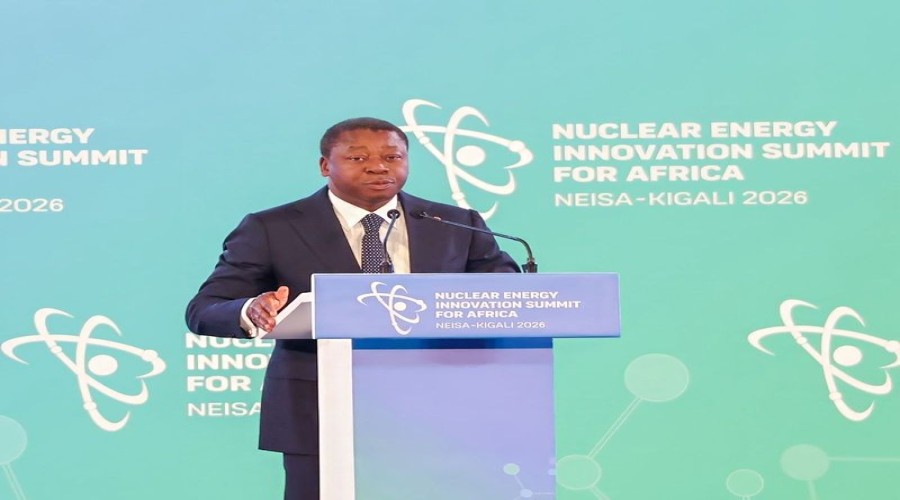
the key voices at the summit was Togolese leader Faure Gnassingbé, who called
for a coordinated continental approach to nuclear energy development as part of
Africa’s broader quest for energy sovereignty and economic transformation.
Speaking
during the opening session, Gnassingbé argued that Africa’s growing
urbanization, industrialization, digitalization, and adoption of emerging
technologies such as artificial intelligence would require stable and
continuous energy sources beyond current renewable energy capacity.
He
acknowledged the importance of solar and hydroelectric power but stressed that
future industrial requirements, including data centres and digital
infrastructure, would demand reliable baseload electricity. He pointed to civil
nuclear energy, particularly small modular reactors and microreactors, as a
viable long-term solution for the continent.
The
Togolese leader also highlighted steps already taken by Togo to prepare for
nuclear energy development. He noted that the country, a member of the
International Atomic Energy Agency since 2012, had adopted legislation
governing the safe and peaceful use of nuclear technology and established an
Atomic Energy Commission in January 2025. He further cited ongoing exploration
of micro modular reactors for off-grid communities and recent cooperation
agreements signed with the IAEA.
Gnassingbé
urged African countries to pursue collective action by harmonizing regulations,
aligning technical standards, aggregating demand, and developing continental
financing frameworks involving development banks, sovereign wealth funds, and
private investors.
He
also emphasized the importance of investing in African expertise through the
large-scale training of scientists, engineers, technicians, regulators, and
legal professionals, while encouraging greater participation of young people
and women in the sector.
Rwandan
President Paul Kagame also called for accelerated development of nuclear energy
in Africa, stressing the need for regional cooperation to strengthen energy
security and independence across the continent.
Kagame
commended Togo’s progress in the nuclear sector and welcomed the decision for
the country to host the next edition of the NEISA summit, describing it as
recognition of its growing leadership in energy innovation and regional
cooperation.
The
summit also featured participation from Tanzanian President Samia Suluhu
Hassan, International Atomic Energy Agency Director General Rafael Mariano
Grossi, representatives from the United Nations Economic Commission for Africa,
the Nuclear Energy Agency, and the World Nuclear Association.
Organizers
said the summit is expected to produce a continental framework for nuclear
energy financing, strengthen regional cooperation mechanisms, and establish
regulatory and institutional priorities to support future nuclear energy
projects across Africa.